
The UAE has been ranked first among nine emerging family office hubs worldwide, with a composite score of 74 out of 100 that places the country ahead of four of the eight established wealth centres, including the United States, the United Kingdom, Liechtenstein and Monaco.
The finding comes from Family Offices: Best Jurisdictions Worldwide, a new study by the Global Intelligence Unit of Global Citizen Solutions, the London-based residency and citizenship planning firm. The report compares 33 jurisdictions on two dimensions: what each offers the family office itself, and what it offers the family behind it.
For our clients holding or considering Abu Dhabi property, this is not an abstract headline. It is a measurable shift in where the world's private capital is choosing to domicile, and that capital is already expressing itself through demand for the capital's prime residential assets.
What the ranking measured
The study scores jurisdictions on regulation, taxation, ecosystem depth and the quality of the financial centre supporting them. The UAE achieved a perfect score of 100 on regime and tax, and 78 on ecosystem and centre depth, the highest ecosystem score of any emerging hub and above five of the eight established centres.
Qatar ranked second among emerging centres with 66.8 points, matching the UAE with a perfect 100 on regime and tax. India placed third, Malaysia fourth and Italy fifth. Saudi Arabia ranked eighth with 47.1 points.
The report's central argument is one we recognise from practice: terms open the door, but the ecosystem keeps it open. Tax advantages can be written in a budget cycle; the industry infrastructure behind them takes a decade to build. Only six of the 33 jurisdictions studied clear the median on both measures.
Investor Proof
The Abu Dhabi Off-Plan Flip Strategy, Proof of Concept
Three executed transactions, real contracts, and a blended 62% ROI in 12 months with only 20% capital deployed before resale.
- ≈62% blended ROI, 12-month cycle
- 20% capital deployed pre-resale
- AED 3.4M profit locked across 3 flips
Download the Proof of Concept
Instant download once the required fields are complete.
Thank you.
The numbers behind the rise
The Dubai International Financial Centre recorded 1,408 family business-related entities by the end of June 2026, growth of 36 per cent year on year. DIFC introduced its regulatory framework for family offices in 2008, four years after the centre itself was established, while Abu Dhabi Global Market on Al Maryah Island has built its own dedicated regime, including a single family office licence that allows families to manage wealth without full regulatory requirements.
Dubai now ranks seventh among the world's financial centres in the 2026 Z/Yen classification. At the global level, Deloitte projects that wealth held in family office structures will grow from US$5.5 trillion in 2024 to US$9.5 trillion by 2030, with the number of single family offices worldwide rising from 8,030 to 10,720 over the same period.
According to the UBS Global Family Office Report 2026, 88 per cent of family offices now hold bankable assets in two or more jurisdictions. As Global Citizen Solutions founder Patricia Casaburi puts it, mobility is now treated as part of a family office's diversification strategy, not as something alongside it.
Free Investor Guide
The Abu Dhabi Investment Guide
District-by-district yields, payment-plan mechanics, service charges and exit liquidity, everything we brief our private clients on, in one guide.
Get the Guide
We will send it straight to you.
Thank you.
The guide is on its way to your inbox. Our team may follow up once, no spam, ever.
Why families are choosing the Emirates
The UAE levies no personal income tax and applies a statutory rate of zero when wealth passes to the next generation. Around that fiscal core sits a legal environment designed specifically for family wealth: the DIFC Family Arrangements Regulations, ADGM's common law framework, and residency pathways that let principals and their families live where their structures are based.
Of the 33 jurisdictions in the study, 25 offer foreign families a route to citizenship, and 21 place no restriction on dual nationality. Families are increasingly diversifying their citizenships alongside their assets, with both decisions taken by the same people at the same table, as the report notes.
The UK's removal of non-domiciled status and rising European tax burdens are accelerating the flow. The Henley Private Wealth Migration Report has forecast a net loss of 16,500 millionaires from the UK in 2025, while the UAE continues to record the world's strongest net inflows of private wealth.
What this means for Abu Dhabi real estate
Family offices do not allocate like retail investors. They buy for capital preservation first and yield second, and they concentrate on assets with durable scarcity: waterfront positions, branded residences and low-density prime districts. That mandate maps directly onto Abu Dhabi's current development cycle.
We see it in our own mandate flow. Families establishing structures at ADGM are acquiring residences on Al Maryah Island, Saadiyat Island and the Yas Canal frontage, often pairing a primary home with one or two investment units in the same master community. The Ritz-Carlton Residences on Al Maryah Island, the cultural district launches on Saadiyat and the new canal-side releases on Yas are precisely the product profile this capital seeks.
Supply at this end of the market is finite by design. Abu Dhabi releases prime plots in measured phases, and the emirate's planning framework keeps density low in the districts family offices favour. As the number of global family offices grows toward 10,720 by 2030, the pool of buyers for the capital's trophy assets widens structurally, not cyclically.
Our view
Rankings come and go, but this one confirms what transaction data has told us for several quarters: the UAE's proposition to private wealth is now systemic, combining tax, regulation, ecosystem and lifestyle in a single jurisdiction. For families weighing where to anchor the next generation of their wealth, Abu Dhabi offers something the established centres cannot, a top-ranked regulatory and tax regime attached to a prime property market still early in its institutional cycle.
If you are structuring a family office presence in the UAE, or repositioning a portfolio toward the capital, our advisory team works at this intersection daily. We advise on both the asset selection and the sequencing, from first acquisition to portfolio build-out across Abu Dhabi's prime districts.
Discuss Your Investment Strategy
Read something that fits your plans? Speak with our advisory team.
Thank you.
Thank you, our team will be in touch shortly.
Keep Reading
Related Insights
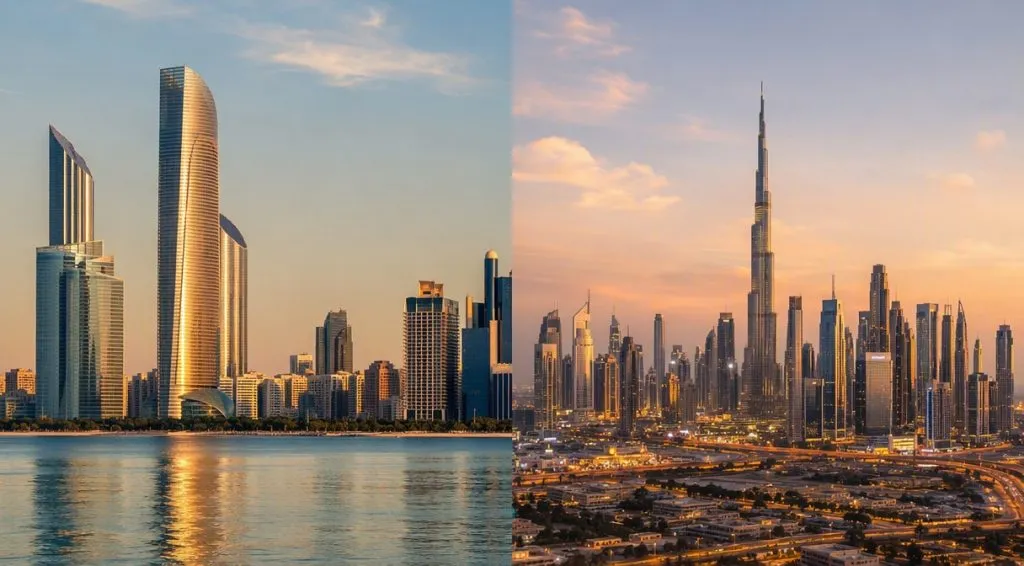
Market News & Analysis
Abu Dhabi vs Dubai for Off-Plan Investment (2026)
Written by the Bramwell & Partners advisory team, Abu Dhabi real estate advisors. Last reviewed: October 2026. Every week, buyers ask us some version of…
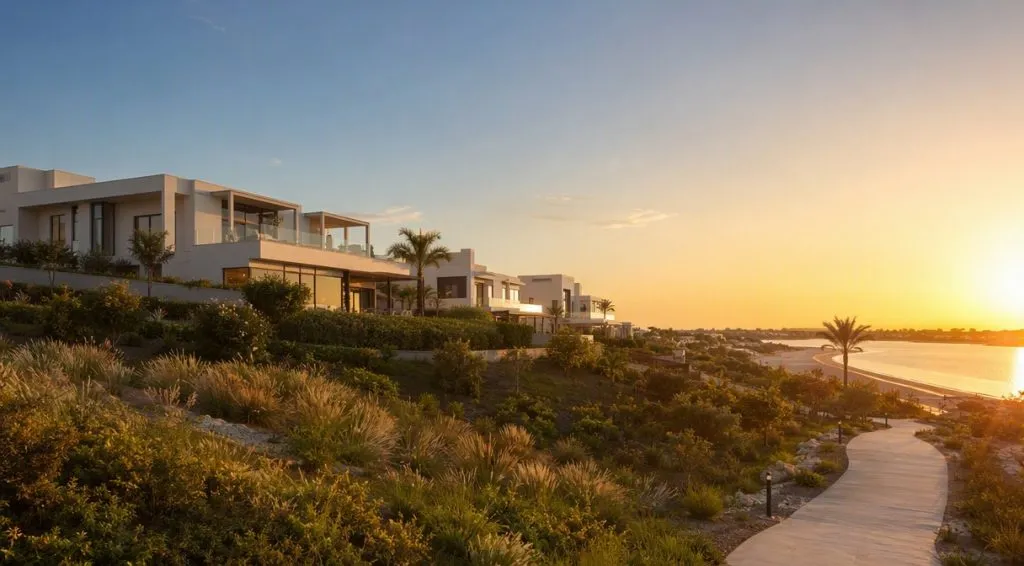
Market News & Analysis
Nawayef East Hills by Modon: Prices & Investment Case
Written by the Bramwell & Partners advisory team, Abu Dhabi real estate advisors. Last reviewed: October 2026. Nawayef East Hills is Modon's ultra-prime…
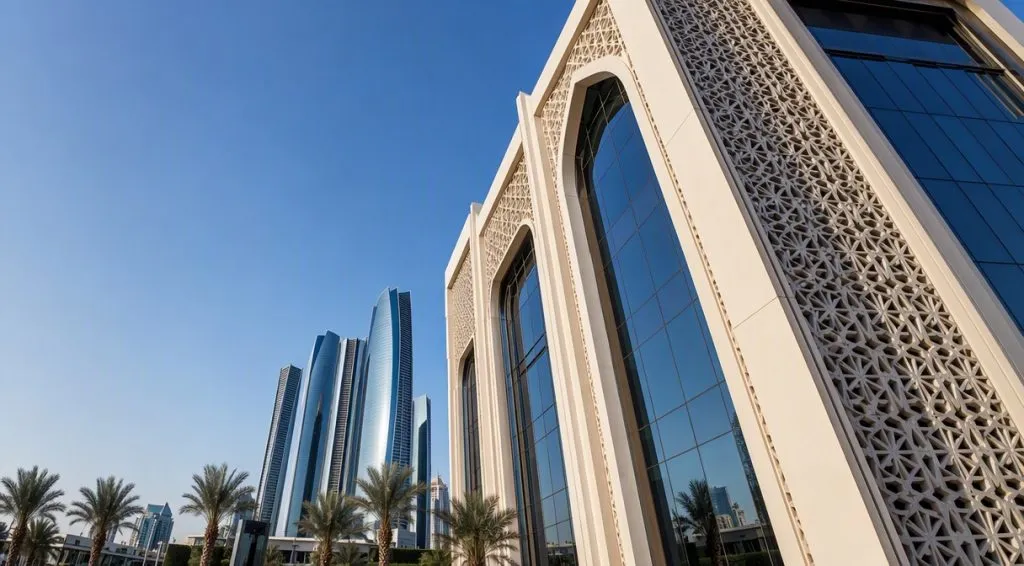
Market News & Analysis
Modon & ADIB 75% Off-Plan Financing Explained
Written by the Bramwell & Partners advisory team, Abu Dhabi real estate advisors. Last reviewed: October 2026. On 7 July 2026, Modon Holding and Abu…